Apple Vision Pro (2) Review — Better, But the Same Big Idea
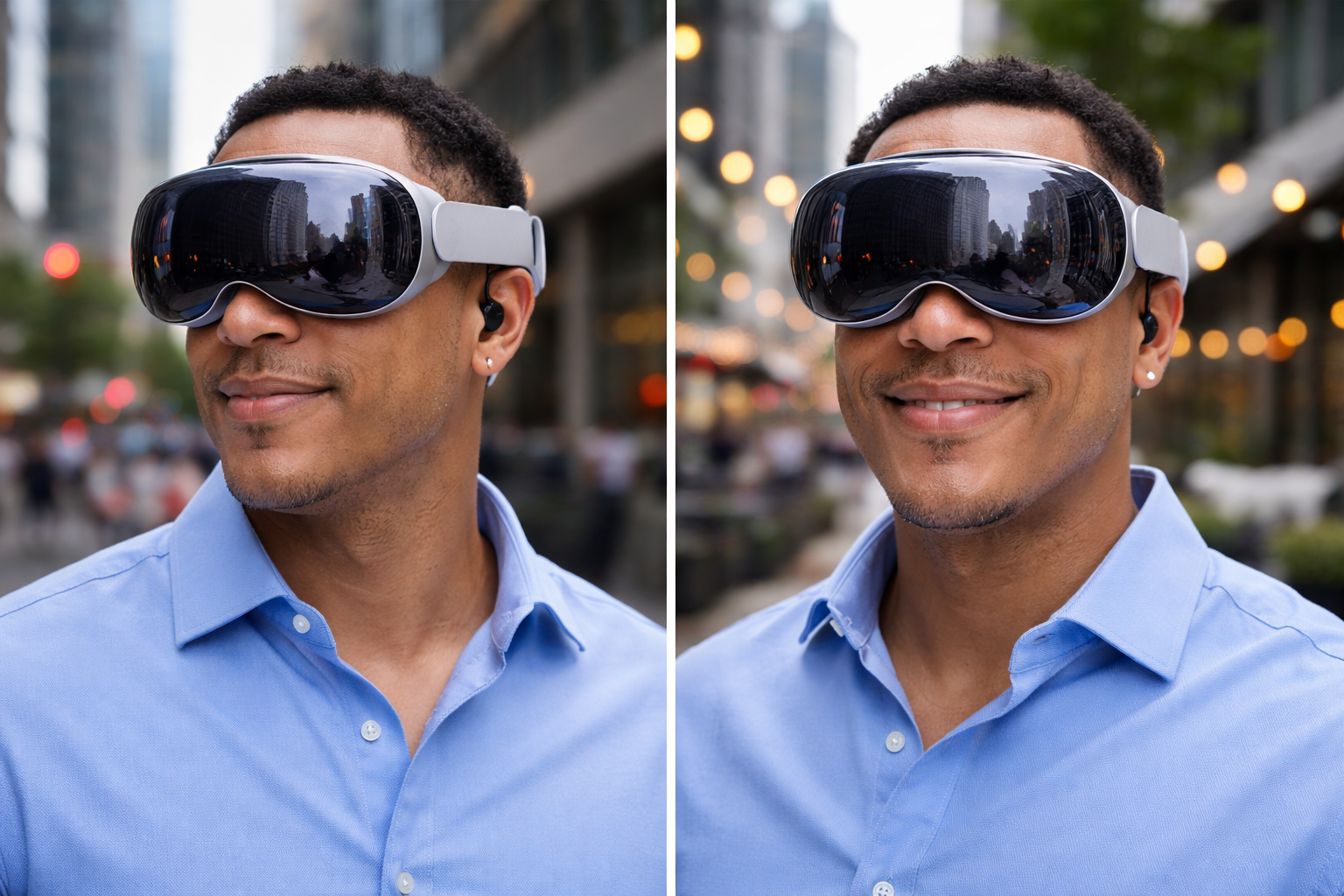
By Omer Khan — Apple’s Vision Pro returns for its second act, and if you were hoping for a revolutionary rewrite, think again. What Apple has done instead is refine its first-generation spatial computing headset — improving battery life, polishing performance, and tightening the experience — but not fundamentally changing the proposition. The result is a headset that feels more trustworthy and capable than before, but still carries the same question that hung over the original: Who is this for?
A More Polished Vision
From the moment you put on the Vision Pro (2), it’s obvious Apple has learned from its launch year. The hardware feels more comfortable and reliable, the software is smoother, and the headset seems genuinely more ready for real work and real play than before. Apple’s spatial computing vision — a mix of virtual screens, immersive environments, and intuitive hand/eye tracking — finally feels less like an experiment and more like a product.
The quality of the displays remains excellent: high resolution, bright images, rich colors, and minimal “screen door” effect make text easy to read and visuals compelling. Apple’s spatial audio continues to help create a sense of presence that few competitors can match.
What’s Improved
The Vision Pro (2) makes meaningful strides in a few key areas:
Battery life feels better — Apple claims improvements, and while the headset still runs hot and needs an external battery pack, you can get through longer creative sessions and multitasking workflows without heading straight for the charger.
Performance is smoother — Apps load faster, transitions feel more seamless, and the system overall seems more responsive. This makes the experience feel less like a tech demo and more like a working tool.
Refined comfort — Better weight distribution and facial interface refinement make it easier to wear the headset for extended periods, though it’s still a noticeable accessory on your face.
Still the Same Vision
What hasn’t changed is the core proposition: Apple isn’t pitching the Vision Pro (2) as a pure VR headset, nor as a full AR device with opaque visual overlays. Instead, it lives in a hybrid “spatial computing” space where your digital screens float in front of you and respond to eye tracking and hand gestures. It’s more intuitive than traditional VR menus, but also fundamentally different from an augmented reality lens that blends into your real world.
Some experiences are magical — watching a movie on a wall-sized display in your living room, referencing floating documents while you work, or navigating menus with eye gaze. Others feel half-baked: virtual keyboards that are less accurate than a real one, apps that feel like they’re designed for a flat screen, and features that don’t yet justify the price tag.
The Cost vs. Utility Tradeoff
The Vision Pro has never been a mass-market product — and the second generation doesn’t change that. You’re buying a premium headset with premium performance, but the world of apps and optimized experiences still feels small compared to what’s available on phones, laptops, and even tablets. Many tasks that look cool in demos still feel slower or less comfortable than simply using a laptop or phone.
That said, for creative professionals, designers, developers, and those who genuinely crave new spatial workflows, Vision Pro (2) feels closer to something “useful” rather than just futuristic. Still, Apple’s pricing and niche appeal make it tough to justify as a household gadget or casual entertainment device.
Final Verdict
The Apple Vision Pro (2) is a refinement, not a revolution. It delivers better performance, longer usable sessions, and a more confident sense of what Apple wants spatial computing to be — but it does not transform the market overnight. This is a powerful, thoughtfully engineered device for early adopters and spatial computing enthusiasts, yet still a headset that raises the same fundamental question it did at launch: Does the world need this, and are most people ready for it?
If you care deeply about immersive computing, productivity beyond a traditional screen, and cutting-edge interaction models — and you have the budget for it — the Vision Pro (2) is undeniably compelling. But for most users, it still feels like a remarkable prototype of the future rather than a must-own product today.